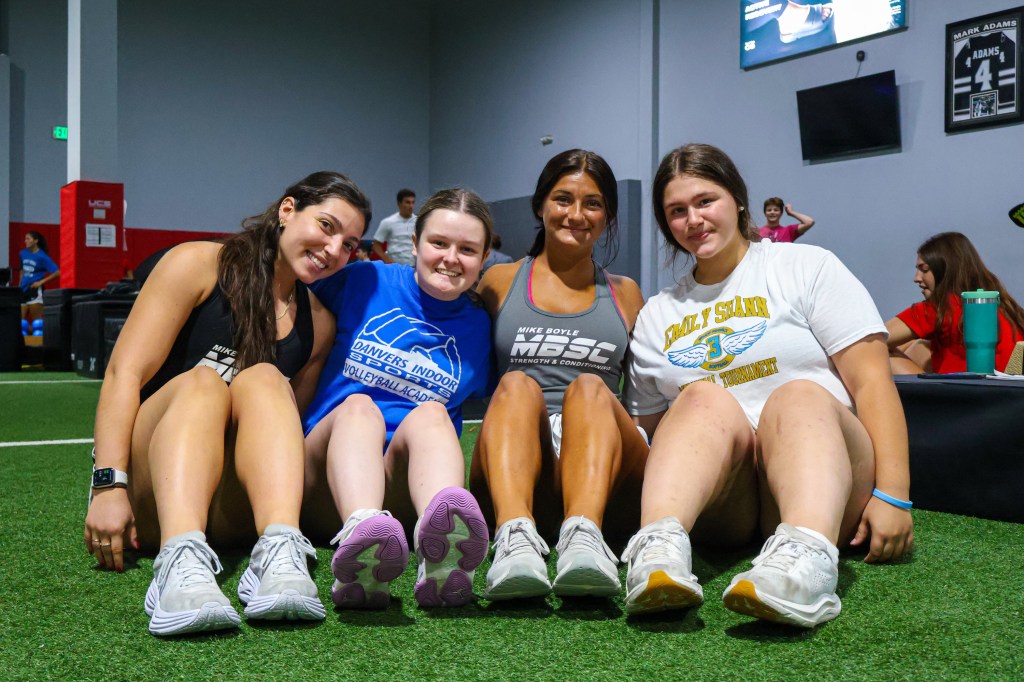
I am blessed to say I have coached for a full year.
This year has encompassed an abundance of memories, challenges, growth, learning, resilience, vulnerability, and grace. A big credit for this is due to the humans I interact with everyday: coworkers, athletes, parents, guardians, and others who always bring a new perspective on any given moment in time I look back on.
I have been able to look back on some of this past year and acknowledge that although there is always going to be more learning experiences, there is also something said for looking at all the things you have learned thus far which I would love to share a little of.
First off, I appreciate all of the amazing brains and people I have been able to learn and grow from in respect to my coaching abilities and personal life.
I have found new passions and things that drive me in my coaching. These include: nutrition in relation to training and filling each person’s cup that walks through the door. As I’ve been told and repeated to others, one of the real arts of coaching is really getting to know the people in front of you- who they are, what drives them, why are they here, what motivation do they need, what hat do they need you (as their coach) to wear for the next hour or so.
The beautiful part about this is, the more you do it, the better you get at it. The more you are exposed to different people, motivations, injuries, passions, sports, and goals, the better you are at being able to pivot not only your training programs but also your actual training itself to be better suited to the individual athlete.
My senior thesis project topic was how different coaching styles positively or negatively impact athlete motivation. This nine month research project engrossed me in something I had rarely thought about but is now one of the first things I ask myself when meeting a new athlete. This question is, “How am I going to have my coaching adapt to this individual to make them the most successful version of themselves?”.
Some may think that is not completely necessary or that having a great program with all the perfect variables is all you need. Now, while that is absolutely apparent and vital, I can confidently say that coaching style is also going to make the utmost different in how that program gets accomplished.
Coaching style lends itself to so many outcomes such as: quality and length of coach/athlete relationship, athlete burnout, motivation levels, behavior (positive or negative), comfort levels, and many other variables. Our coaching styles can trigger positive or negative reinforcements for all of these outcomes as well as continue to feed their training in the right or wrong direction.
Whether a strength and conditioning coach at a university or in the private sector, it is our job to get our athletes where they need/want to be but how we do it will be much more effective and elicit more of a positive impact if we tailor our way of communication and motivation to their own personal and individualized traits.
Citations
Bandura, C. T., & Kavussanu, M. (2018). Authentic leadership in sport: Its relationship with athletes’ enjoyment and commitment and the mediating role of autonomy and trust. International Journal of Sports Science & Coaching, 13(6), 968–977.
Hummell, C., Herbison, J. D., Turnnidge, J., & Côté, J. (2023). Assessing the effectiveness of the transformational coaching workshop using behavior change theory. International Journal of Sports Science & Coaching, 18(1), 3-12. https://doi.org/10.1177/17479541221122435
Mohd Kassim, A. F., & Boardley, I. D. (2018). Athlete perceptions of coaching effectiveness and athlete-level outcomes in team and individual sports: A cross-cultural investigation. Sport Psychologist, 32(3), 189–198.
Kim, S., Hong, S., Magnusen, M. J., & Rhee, Y. (2020). Hard knock coaching: A cross-cultural study of the effects of abusive leader behaviors on athlete satisfaction and commitment through interactional justice. International Journal of Sports Science & Coaching, 15(5/6), 597–609.
Kim, M., Kim, Y. D., & Lee, H.-W. (2020). It is time to consider athletes’ well-being and performance satisfaction: The roles of authentic leadership and psychological capital. Sport Management Review, 23(5), 964–977.
Szedlak, C., Smith, M. J., Day, M. C., & Greenlees, I. A. (2015). Effective behaviours of strength and conditioning coaches as perceived by athletes. International Journal of Sports Science & Coaching, 10(5), 967–984.
Tongling Wang. (2022). The effect of coaching support behavior on the intrinsic motivation of athletes: The mediating role of psychological needs . Journal of Sport Psychology / Revista de Psicología Del Deporte, 31(2), 29–36.

 Hi There! welcome to Rachel DiFronzo fitness!
Leave a comment