A lot of people experience lower back pain as they perform abdominal exercises on their back (anti-extension exercises). This could be for a few reasons! What I state in this post is not an end all be all to that problem nor am I trying to diagnose you, however these are tools to play around with to try and help nail down what may be the reason!
Exercises that are performed for the abs on your back fall into the anti-extension bucket of abdominal exercises. This simply means that you are trying to avoid lower back extension while doing these exercises by flexing your abdominal muscles. If your abs are failing to produce enough strength, your back will slowly fall into extension which can cause pain to the area while executing the exercise.
Examples of anti-extension exercises for abdominal muscles include but are not limited to: dead-bugs, front planks, hollow holds, bird-dogs, TRX fallouts, bear planks and crawls, Pallof presses/holds, KB halos, etc.
One of the main reasons that your lower back may be hurting, while doing any of the exercises mentioned above, could be due to not properly tucking your pelvis into the right position. This would allow your lower back to be in extension. There is a simple way to check this. Let’s try and perform the dead-big exercise. Lie on the ground with your back completely flat, feet up in the air with knees bent, and arms straight overhead. If someone tried to put their hand between your lower back and the ground, there should be no space. If there is space, that means that your lower back is in the extended position which is not what we want. The picture below shows someone’s lower back in extension. We can tell because my ribs are flared upward, and there is space between my lower back and the floor. A different way of saying this would be that my pelvis is tilted anteriorly which makes my back peel up.
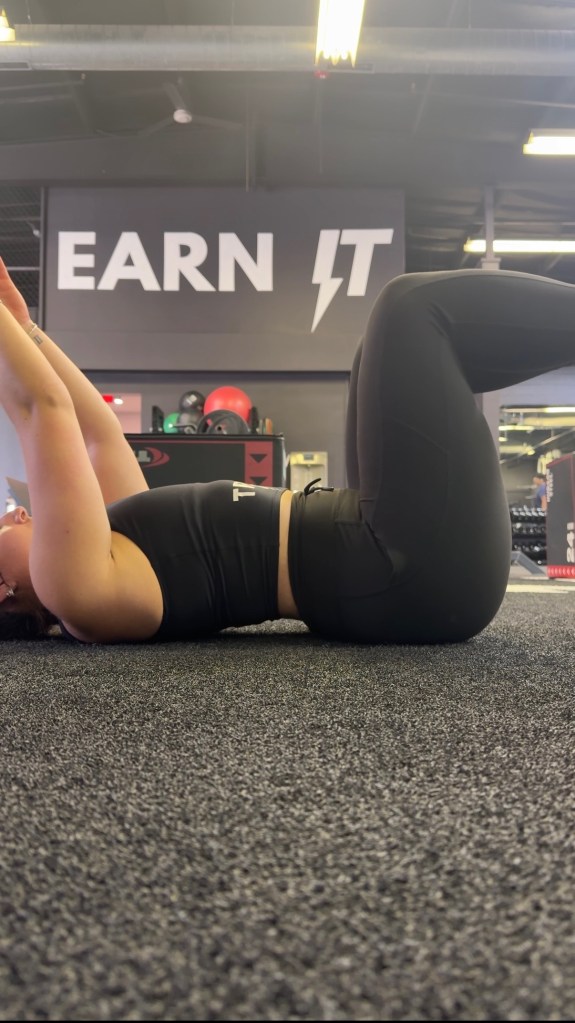
In order to correct this and get rid of the back pain caused by this, we need to tilt the pelvis into a posterior position. This would make the lower back completely flat against the floor and create pressure in the abdomen having the ribs come down in the un-flared position. The photo below shows me correcting my lower back and pelvis into the right position.
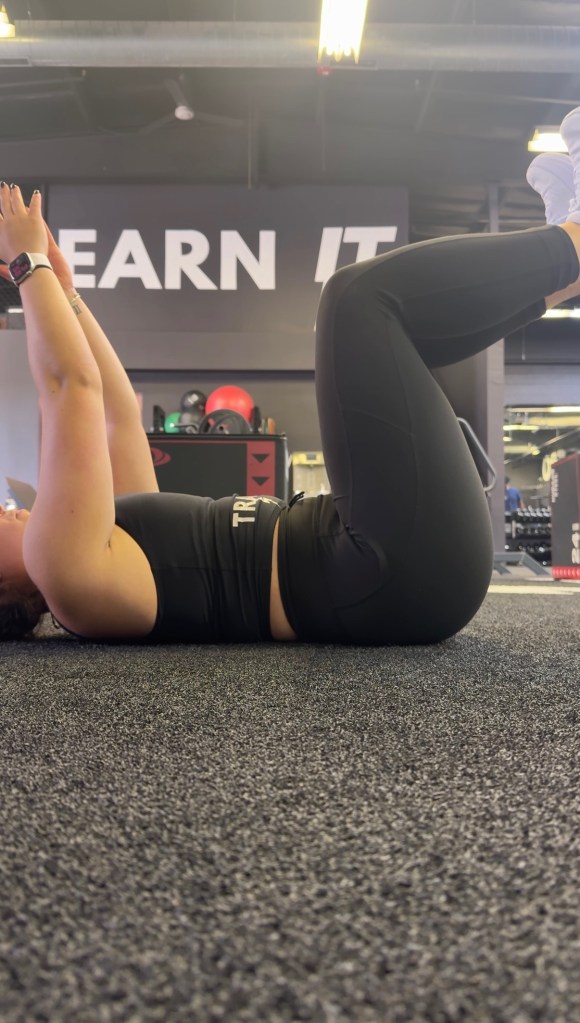
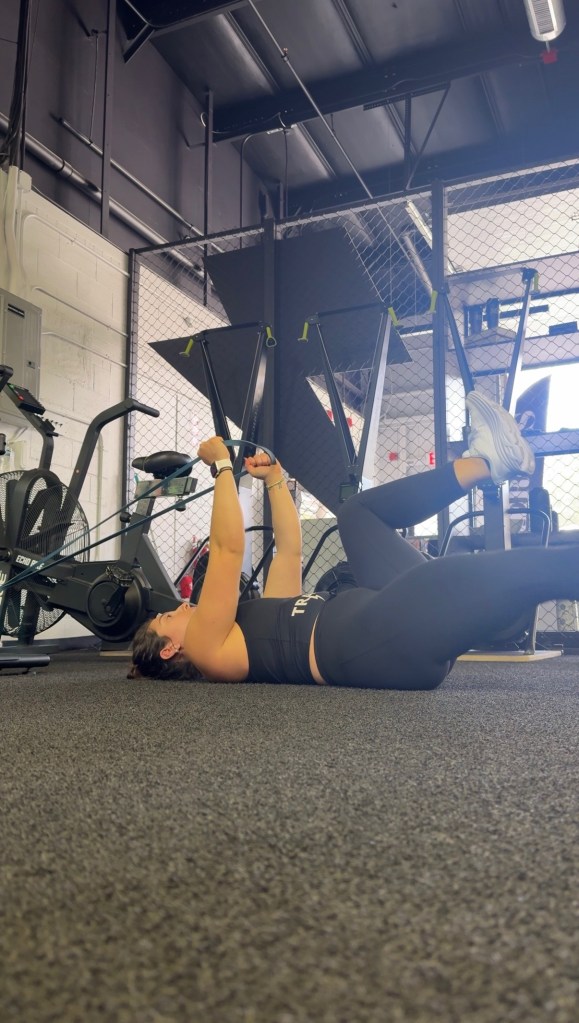
In order to assist the pelvis to get in the right position, there are a few ways to help create intra-abdominal pressure. One could be using a PVC pipe and pressing it into the bottoms of the thighs which would help keep the pelvis in the right position. You could also attach a band anchored behind your head at head level. Grabbing onto it with both hands and pulling it to chest level will also help create that pressure we are looking for to avoid incorrect lower back position.
Pictures below show (1) PVC pipe dead-bugs and (2) band anchored dead-bugs
(1)

(2)
If you are having lower back pain when performing anti-extension abdominal exercises, play around with these movements and variations and see if this helps you out at all!
 Hi There! welcome to Rachel DiFronzo fitness!
Leave a comment